
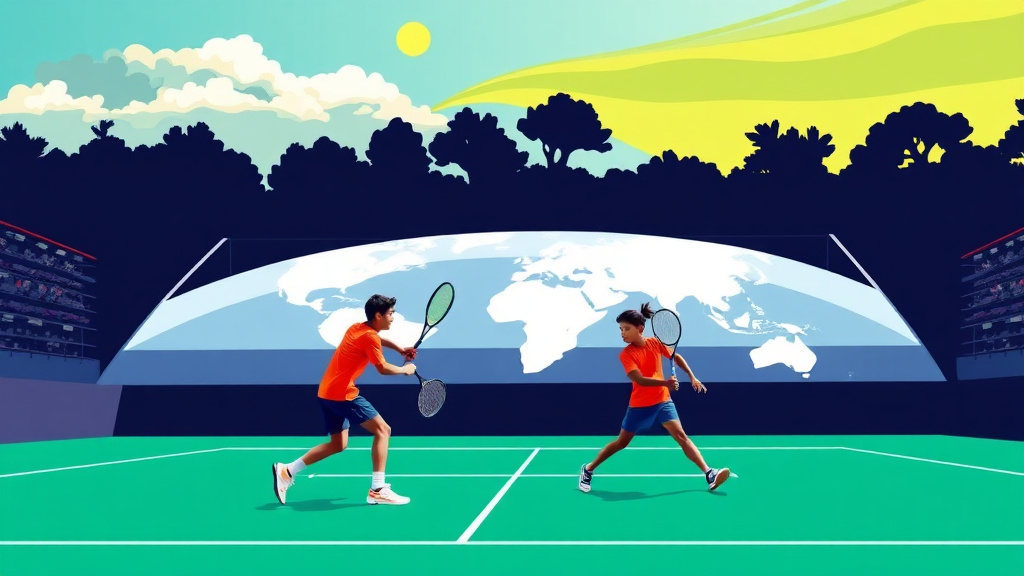
The tennis world is experiencing a seismic shift as a emerging wave of junior players reshapes competitive play with their attacking ground strategies. These young athletes are shattering records and defeating seasoned rivals by abandoning traditional defensive approaches in favor of aggressive, dominant groundstrokes. This article examines how emerging talents are leveraging modern coaching methods, enhanced athleticism, and bold strategic execution to excel in global championships, fundamentally reshaping expectations for the sport’s future elite.
The New Generation of Court Fundamentalists
The modern junior tennis circuit reveals a remarkable evolution in playing style, with young competitors implementing aggressive baseline tactics that fundamentally challenge traditional thinking. These emerging champions demonstrate outstanding court awareness, explosive footwork, and firm belief in hitting aggressive strokes from the baseline. Their approach represents a deliberate departure from the conservative, grinding style that characterized previous generations, instead emphasizing quick point control and pace of play to determine final scores decisively.
Modern instructional techniques have equipped these junior athletes with the physiological preparation and technical proficiency necessary to sustain attacking tennis throughout lengthy contests. Specialized coaching programs emphasize reliable topspin production, greater racquet velocity, and exact positioning of strategic angles, enabling players to build attacking sequences from baseline areas. The incorporation of performance data and video analysis further refines their competitive approach, allowing these players to recognize vulnerabilities and exploit them systematically through continuous attacking intensity.
What characterizes this generation is their psychological resilience and bold approach when executing bold, high-return approaches. Rather than falling back on conservative play during pivotal stages, these young competitors maintain their offensive baseline strategy, trusting their preparation and technical abilities. This unwavering commitment to aggressive tennis has generated outstanding displays at international championships, captivating audiences and establishing new benchmarks for competitive excellence in youth professional tennis.
Strategic Development in Junior Tennis
The move toward attacking baseline strategies reflects a major change from conventional junior tennis instruction. Modern training methods emphasize taking the ball early, shortened backswings, and dynamic power production from the ground up. Young players now focus on pressuring opponents through penetrating groundstrokes rather than developing points gradually. This evolution reflects wider transformations in athletic training, with junior programs incorporating strength conditioning, biomechanical analysis, and athletic science to maximize effectiveness. The result is a generation outfitted with the physical tools and strategic understanding to execute high-risk, high-reward strategies regularly.
Technology has accelerated this tactical evolution substantially. Advanced racket engineering, enhanced string materials, and detailed match analytics enable junior players to identify and exploit baseline vulnerabilities with accuracy. Match footage review allows coaches to dissect opponent patterns instantly, while real-time biometric feedback optimizes player conditioning and decision-making during matches. Junior players now review professional play in depth, implementing and refining aggressive tactics traditionally exclusive to elite competitors. This democratization of advanced training resources has created a intensely competitive landscape where aggressive baseline dominance has become the prevailing benchmark rather than an innovative exception.
Primary Approaches Enabling Success
The prominence of young competitors at international championships stems from a fundamental shift in tactical philosophy and preparation techniques. These up-and-coming players have identified and mastered key strategic elements that create competitive benefits over traditional players. By merging physical conditioning, emotional toughness, and innovative shot selection, they have created a winning formula that regularly produces victories on global competition’s largest arenas.
Performance and Dependability Combined
The cornerstone of success for these junior champions rests on their ability to create exceptional power while maintaining strong steadiness from the baseline. Modern training regimens emphasize powerful strokes and racket acceleration training, helping players to hit harder without compromising accuracy. This strategy allows them to control play from the start, pushing opponents into reactive stances and restricting their ability to construct effective strategies during rallies.
Consistency proves vital as these players deploy their forceful court strategies with accuracy and consistency. Detailed biomechanical assessment and video technology allow coaches to refine technique continuously, ensuring that power generation doesn’t compromise control. The result is a group equipped of maintaining intensity throughout complete contests, wearing down opponents through relentless attacking play rather than defensive stalling.
- Powerful groundstrokes with topspin control
- Quick point dominance through aggressive baseline positioning
- Lower unforced error rates while maintaining attacking play style
- Reliable depth and speed control throughout matches
- Strategic court placement enhancing offensive opportunities
The blending of power and consistency creates a competitive advantage that transcends pure statistics. Opponents encounter the daunting prospect of contending with relentless attacking waves while concurrently dealing with their own attacking prospects. This mental pressure, combined with the physical exertion of managing aggressive baseline strategies, commonly produces opponent exhaustion and more mistakes as matches progress.
