
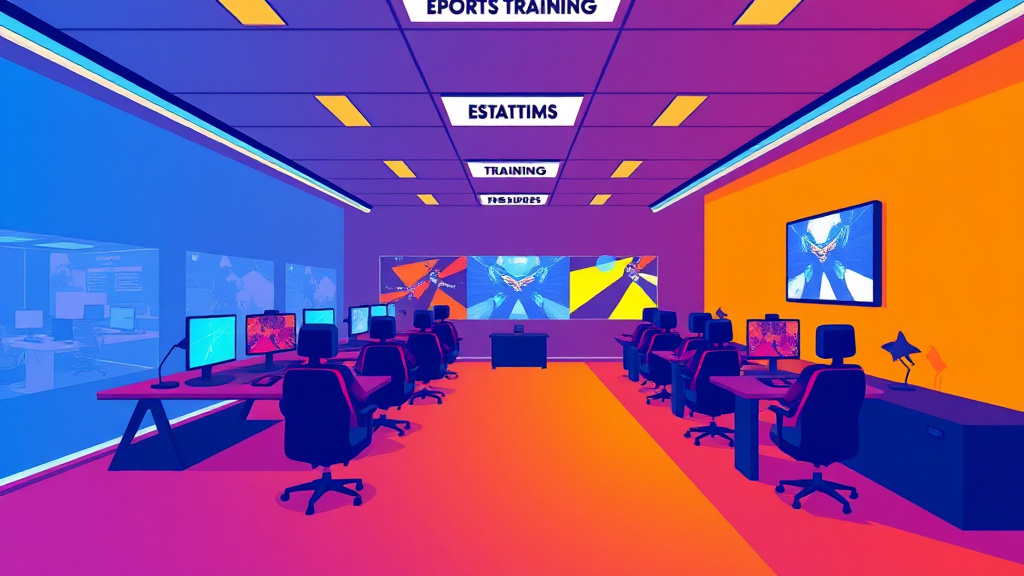
The esports industry has undergone a significant evolution, moving from basement competitions to a multi-billion dollar sector. Modern esports organizations are no longer scrappy underdogs—they’re sophisticated operations investing millions in cutting-edge practice centers, expert coaching teams, and performance science initiatives. This article explores how top esports organizations are adopting conventional sports structures, analyzing the advanced facilities and expert mentorship that distinguish championship-winning teams from the rest, and how these expenditures reveals about esports’ acceptance in mainstream culture.
The Development of Esports Infrastructure
The esports landscape has shifted substantially over the last ten years, moving away from informal gaming sessions in basements to professionally structured organizations running elite training centers. Early esports teams operated with limited resources, utilizing players’ own gear and improvised training areas. Today’s leading organizations have committed substantial resources to custom-designed spaces including cutting-edge gaming hardware, fast-speed network infrastructure, and ergonomic workstations engineered to enhance player performance and prevent injury during demanding training periods.
This infrastructure evolution reflects the industry’s advancement and growing competitiveness at the top tier. Today’s esports organizations now incorporate elements adapted from conventional athletics, featuring specialized coaching spaces, athletic science facilities, and recuperation areas. Teams acknowledge that physical conditioning, mental wellness services, and dietary support influence gaming performance. The spending on cutting-edge facilities has become essential for attracting elite players, as competitors now demand professional-level facilities similar to those found in mainstream athletics, making infrastructure quality a key competitive advantage within premier organizations.
The professionalization of esports framework goes past concrete facilities to include robust institutional systems. Teams now engage professional coaching teams comprising game strategists, performance specialists, and sports psychologists alongside conventional esports coaches. This cross-functional strategy recognizes that competitive success requires far more than technical ability, calling for tactical analysis, mental toughness, and group unity. The commitment to personnel development and expertise has emerged as essential as venue improvement, positioning esports as a recognized professional industry.
Looking ahead, esports infrastructure remains in evolution with cutting-edge developments transforming instructional approaches and player development. Organizations are implementing AI-powered data analysis, immersive simulation technology, and physiological measurement tools to gain competitive advantages. These infrastructure expenditures reflect esports teams’ dedication to data-driven coaching methods, paralleling progress made in conventional athletics. As the industry matures, infrastructure standards will probably keep increasing, establishing higher standards for what competitive teams must offer to stay competitive at the highest levels.
Modern Training Centers
Contemporary professional gaming teams work out of specially designed practice spaces that compete with traditional sports organizations in sophistication and investment. These dedicated spaces provide regulated settings optimized for professional-level competition, including temperature regulation, properly designed equipment setups, and high-performance technical systems. Teams understand that physical and mental performance directly impact competitive results, resulting in significant financial investment on spaces enabling athlete development, recuperation, and group unity during intensive practice regimens.
Gaming Equipment and Setup
Esports professional organizations invest heavily in premium gaming hardware, guaranteeing players can utilize the most current equipment for optimal performance. High-refresh-rate monitors, precision mechanical keyboards, high-precision mice, and purpose-built gaming computers constitute major investments that directly influence performance edge. Teams carefully adjust equipment settings to align with each player’s specific needs, recognizing that equipment reliability and consistency are essential elements in sustaining top-level performance during competitive tournaments and training sessions.
Beyond individual workstations, teams set up specialized training facilities with numerous gaming setups set up identically to competitive conditions. This uniform setup allows players to work in settings aligned with tournament play, minimizing inconsistencies during gameplay. Spare hardware and backup infrastructure ensure uninterrupted workout periods, while technical support staff continuously monitor and service all equipment to stop efficiency decline or unforeseen issues.
- High-performance monitors delivering superior visual clarity
- Purpose-built gaming PCs with premium processors and graphics
- Specialized competitive peripherals configured for esports performance
- Redundant networking systems ensuring stable connectivity
- Studio-quality audio equipment for group coordination
Specialized Coaching and Support Staff
Professional gaming teams now employ diverse coaching personnel mirroring traditional sports organizations. Head coaches develop strategic gameplay and team chemistry, while position-specific coaches focus on player skill development. Sports psychologists assist players handle stress and enhance psychological performance during competitive events. Analysts examine game footage, recognize opposing tactics, and deliver analytical insights. This multidisciplinary approach ensures players receive comprehensive support across skill, strategic, and mental aspects.
The support systems extends beyond competitive coaching. Dietary specialists develop meal plans optimizing cognitive function and sustained energy levels throughout competitions. Strength coaches create training regimens tackling the physical requirements of esports competition, including eye-hand coordination and cardiovascular conditioning. Sleep specialists advise on recovery protocols critical for preserving optimal performance. Communication coaches help players develop communication expertise and group unity. These expert positions jointly establish an environment where esports athletes can achieve their best.
Focus on Workforce Growth
Leading esports organizations allocate significant resources in youth academies and talent pipelines, spotting talented prospects quickly and nurturing their development. Specialized coaching teams collaborate with junior teams, teaching fundamental skills and competitive discipline. Mentorship programs pair experienced professionals with emerging talents, enabling skill sharing and accelerating growth. These investments secure future roster talent while building team culture and values that endure throughout player generations and competitive cycles.
Data tracking systems monitor player metrics systematically, from reaction times to decision-making accuracy. Coaching staff leverage this data to identify strengths, weaknesses, and development opportunities with analytical rigor. Ongoing performance evaluations and tailored training plans enable sustained progress. Video breakdown sessions analyze winning and losing plays, developing player understanding of game mechanics. This data-driven approach converts subjective coaching into measurable, objective improvement strategies.
Financial Investment and Return on Success
The monetary investment needed to sustain elite gaming squads has hit record highs. Major teams now spend millions each year in facility upgrades, coaching salaries, and talent cultivation initiatives. These considerable spending show competitive evolution and the strategic imperative to attract skilled players and facilities. Squads that neglect to maintain comparable spending stand to lose ground to rivals who provide better practice facilities and specialized instruction. The return on investment manifests through championship success, corporate partnerships, and growing audience numbers that result from winning.
Competitive earnings and income sources showcase the concrete benefits of deliberate capital allocation in organizational systems. Championship victories convert to prize pools, sponsorship payouts, and enhanced brand value. Companies like T1 and FaZe Clan have produced hundreds of millions in revenue through successful esports operations. The correlation between operational excellence and tournament results is undeniable, with richly supported organizations consistently dominating major tournaments. This monetary achievement validates the business model, driving continued investment and drawing institutional capital to the competitive gaming industry.
Sponsorship possibilities have grown substantially for groups possessing world-class facilities and demonstrated performance histories. Brands recognize the marketing potential of high-performing teams with robust social media presence and global reputation. Premium sponsorships command six and seven-figure annual contracts, directly offsetting infrastructure investment costs. Additionally, athlete compensation and performance bonuses financed via sponsorship agreements allow organizations to secure top-tier players. This generates a positive feedback loop where investment drives success, winning brings investment, and sponsorship finances continued growth.
The esports industry’s rapid expansion suggests that present capital investment will sustain growth. Investment companies and established sports entities are increasingly acquiring stakes in esports franchises. This surge in funding drives infrastructure expansion and trainer recruitment within the market. As esports gains popular legitimacy and media rights generate substantial revenue, financial returns on team acquisitions will probably grow substantially, solidifying professional gaming as a credible competitive industry.
